2 September 2026
Anti-Snap, Anti-Bump and Anti-Drill: What Each Lock Feature Actually Does
Snapping, bumping, picking, drilling, twist and thermal attacks explained, and what each anti-attack feature in a modern cylinder does.
Updated November 2026. Written by the WD Locks team, the lock shop of Watchdog Locksmiths, 397-399 Greenford Road, Greenford UB6 8RF. Our Watchdog 3 Star ALPS locks are BSI Kitemark 3 Star TS 007 tested, and installation is available from DBS-checked Watchdog locksmiths.
Key takeaways
- Each anti-attack feature on a lock box targets a different way in: snapping, bumping, picking, drilling, twisting and thermal attack.
- A good cylinder combines several features, because thieves use whatever works.
- A BSI Kitemark 3-star TS 007 rating shows a cylinder has been tested against these attacks.
- Fit the right size: a cylinder that sticks out is easier to attack whatever the features.
Lock marketing is full of “anti” words. They are not all marketing: each one answers a specific way of defeating a lock. This guide explains the common attacks, what the matching feature does and how to check a lock actually has it.
The attacks and what stops them
| Attack | How it works | What the feature does |
|---|---|---|
| Snapping | Force breaks the cylinder at its weak point so the cam can be turned | A reinforced or sacrificial section means the lock can break outside but the inner part still holds the cam |
| Bumping | A specially cut key and a strike make the pins jump so the lock opens | Specially shaped or security pins resist the jump |
| Picking | Tools lift the pins one by one to turn the plug | Security pins and tight tolerances make manipulation harder |
| Drilling | A drill destroys the pins to free the cylinder | Hardened inserts stop the drill from cutting through |
| Twist (extraction) | A tool grips and twists the cylinder body out of the door | A stronger body and good fitting resist the twist |
| Thermal | Extreme heat or cold is used to weaken or free parts | Materials and design that keep working at temperature extremes |
Why more than one feature matters
A thief picks the quickest method for the lock in front of them. A cylinder that stops snapping but is easy to bump has only solved part of the problem. That is why the BSI Kitemark TS 007 test checks several attack methods, and why the 3-star rating is the one most insurers recognise. See 1-star vs 3-star euro cylinders.
How the Watchdog 3 Star ALPS adds to this
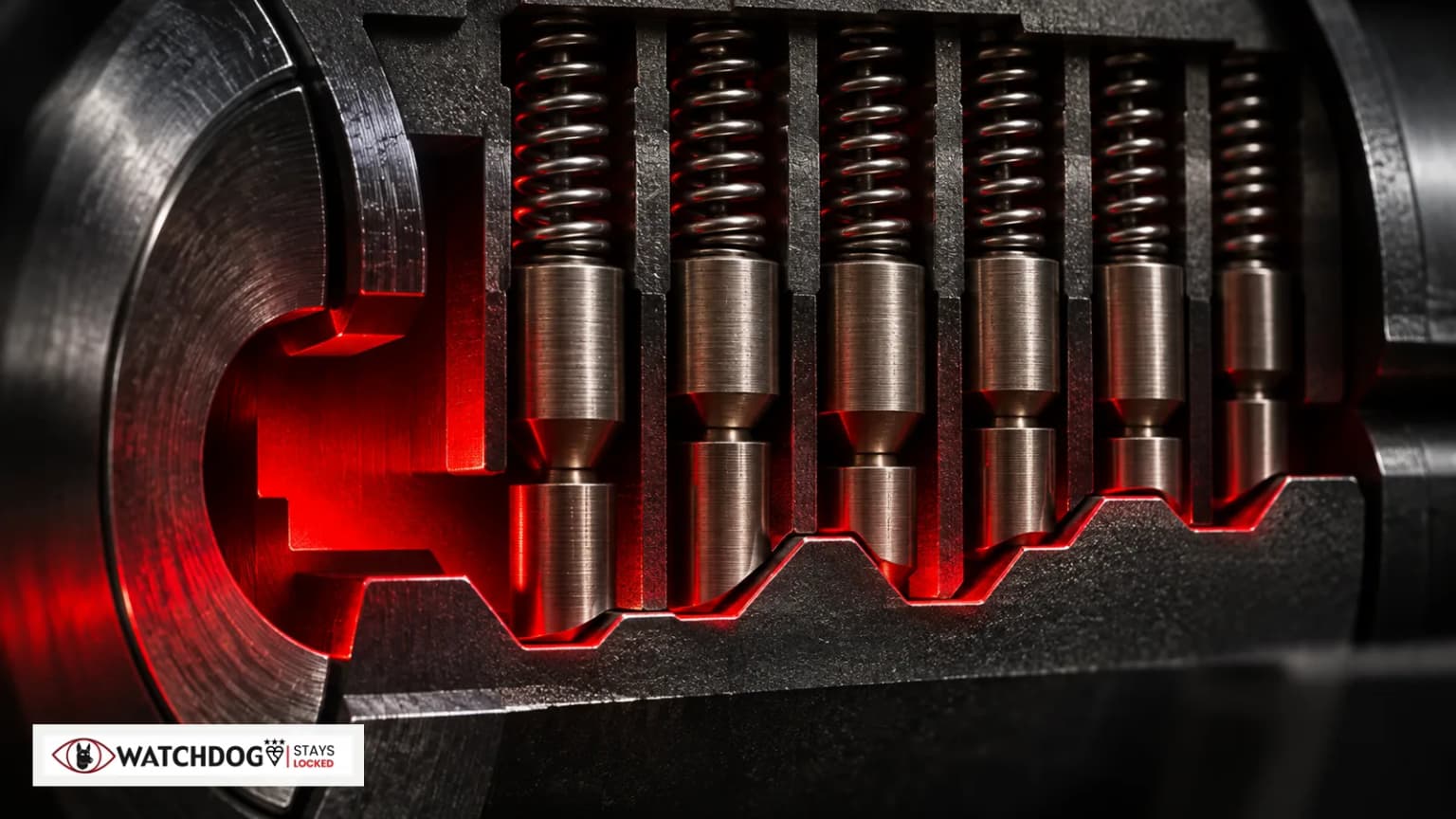
The Watchdog 3 Star ALPS is a BSI Kitemark 3 Star TS 007 anti-snap cylinder built to protect against snapping, picking, bumping, drilling, twist attacks and thermal manipulation. Its Always Locked Protection System locks a pin to secure the operating cam from the moment you remove the key, rather than only after an attack has started.
How to check a lock
- Look for the BSI Kitemark and a 3-star TS 007 marking on the product and box.
- Read the product description for the attacks it is tested against.
- Check the size so the cylinder sits flush. See how to measure a euro cylinder.
- Keep the lock lubricated as the maker advises. See how to look after your euro cylinder.
Frequently asked questions
What is the most common way to attack a euro cylinder?
Snapping is the best known, because a standard cylinder has a deliberate weak point. That is why anti-snap cylinders became the standard recommendation.
Is an anti-bump lock also anti-pick?
Not necessarily. Each feature does a different job, so check the product tests for every attack you want protection from.
Does a 3-star lock stop drilling?
The 3-star TS 007 test includes drilling resistance. A good 3-star cylinder uses hardened parts to resist a drill.
Do I still need good door handles?
Good handles help protect the cylinder from tools. A 3-star cylinder gives the rating on its own, and strong door furniture adds to it.
Choose a lock tested against these attacks.
Browse the WD Locks shop or contact us and we will help you choose the right lock and size.
Sources and further reading
Written by the Watchdog Locksmiths team. Questions about your door? Talk to an expert.