27 October 2026
How to Look After Your Euro Cylinder Lock: Lubrication and When to Replace
How and when to lubricate a euro cylinder, what to avoid and the signs that a lock needs replacing.
Updated November 2026. Written by the WD Locks team, the lock shop of Watchdog Locksmiths, 397-399 Greenford Road, Greenford UB6 8RF. Our Watchdog 3 Star ALPS locks are BSI Kitemark 3 Star TS 007 tested, and installation is available from DBS-checked Watchdog locksmiths.
Key takeaways
- Lubricate your Watchdog 3 Star ALPS lock every 6 months with the Watchdog lock lubricant: it is part of keeping your guarantee.
- Use a short spray into the keyway, work the key in and out, then wipe off the excess.
- Avoid thick oil and grease, which attract dust and can gum the lock.
- A lock that is still sticking after lubrication, or a key that is worn or bending, needs checking or replacing.
A euro cylinder is a precision part that you use every day. A little maintenance keeps it turning smoothly and helps it last. This guide explains how and when to lubricate it, what to avoid and the signs that it is time to replace it.
How often should I lubricate my lock?
For the Watchdog 3 Star ALPS lock, the instructions are to use the Watchdog lock lubricant every 6 months to keep your guarantee. Put a reminder in your diary for every spring and autumn.
How to lubricate a euro cylinder
- Open the door so you cannot get locked out.
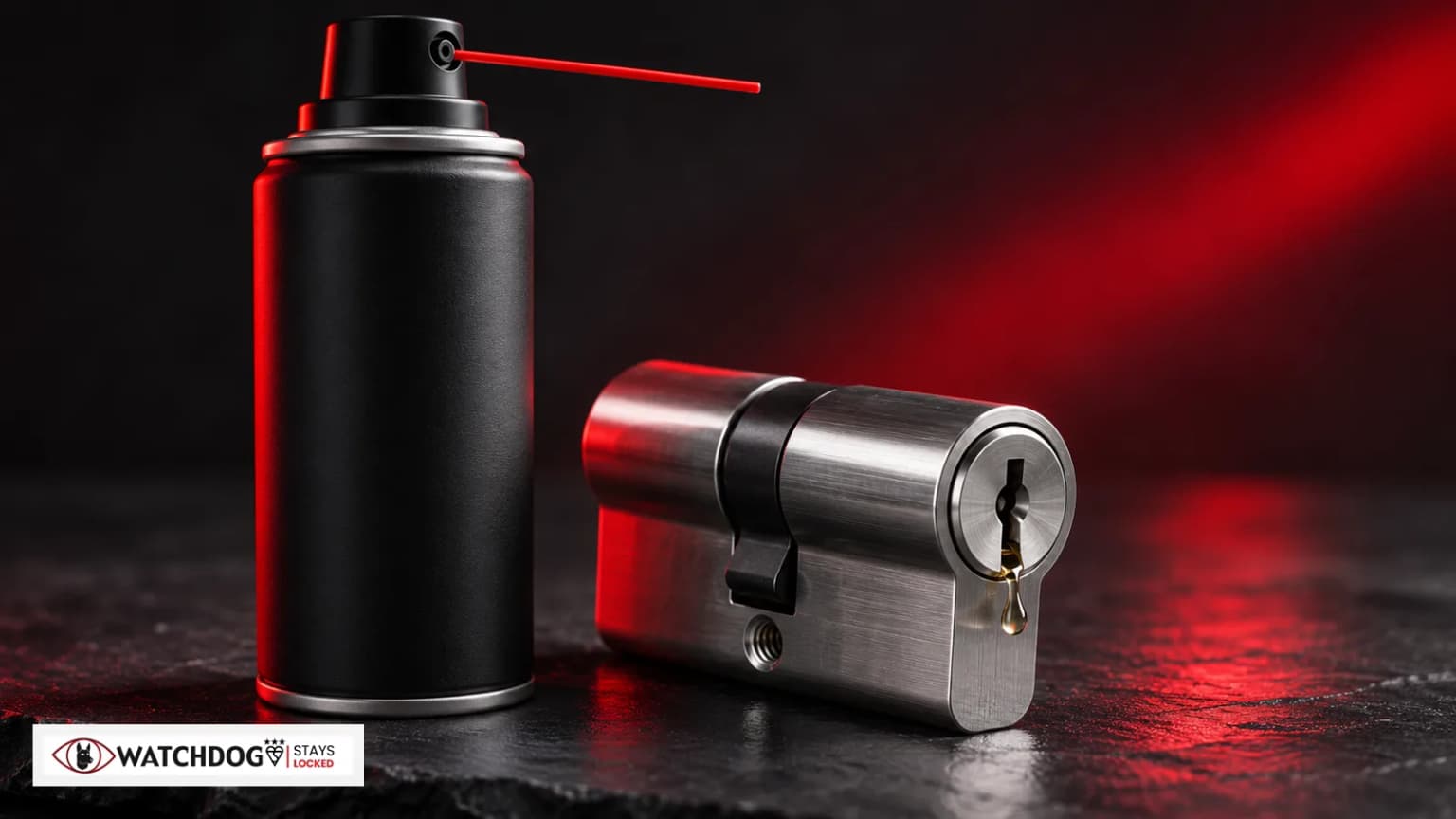
- Give a short spray of the lubricant into the keyway.
- Insert the key and turn it several times so the lubricant spreads through the pins.
- Wipe off any excess from the key and the face of the lock.
- Lubricate the door latch and moving parts with a dry silicone or PTFE spray if the door is stiff.
You can find the Watchdog 3 Star ALPS lock lubricant in the shop.
What to avoid
| Do not use | Why |
|---|---|
| Thick oil or grease | It attracts dust and grit and can gum the pins |
| Too much spray | Excess runs out and collects dirt on the door |
| The wrong product for a guarantee lock | Use the lubricant the maker recommends to keep your guarantee |
Signs a lock needs replacing
- The key still sticks after lubricating.
- The key is bending, or badly worn.
- The lock turns loosely or the cam does not move properly.
- The cylinder has been attacked or damaged in a break-in attempt.
If your door is stiff rather than the cylinder, our locksmiths explain the causes in why your door lock is sticking.
Check the size and fit
A cylinder that sticks out of the door is more exposed to attack. Check how yours sits against the handle plate and see how to measure a euro cylinder if you need to replace it.
Frequently asked questions
Can I use WD-40 on my lock?
We do not recommend general-purpose sprays in a cylinder. For a Watchdog 3 Star ALPS lock, use the Watchdog lock lubricant, as the instructions advise, to keep your guarantee.
How often should I lubricate it?
Every 6 months for a Watchdog 3 Star ALPS lock.
Why is my key hard to turn?
It could be a dry or dirty cylinder, a worn key or a misaligned door. Lubricate first, and if it persists get it checked.
Does lubrication help a stiff handle?
The handle mechanism is separate. Use a dry silicone or PTFE spray on the moving parts, not in the keyway.
Keep your lock turning smoothly.
See the Watchdog lock lubricant or contact us and we will help you choose the right lock and size.
Sources and further reading
Written by the Watchdog Locksmiths team. Questions about your door? Talk to an expert.